
Show Us Your Voice
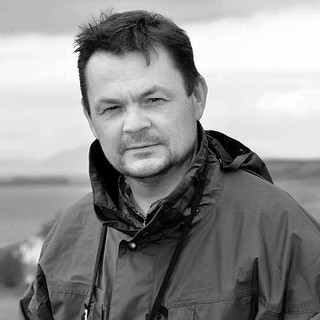
With the call for entries nearing its close on 11 October, Rob Read gives his advice on entry choices.

There comes a point in photography when taking a technically good photograph is no longer quite enough. You begin to want something else from your pictures. Something that is harder to define and certainly harder to teach. You want them to feel like yours.
Not because they use a particular technique. Not because they conform to a recognisable style. But because somewhere in the choices you make - what you notice, what you leave out, when you press the shutter and how you interpret what was in front of you - a little of yourself finds its way into the photograph.
For me, that is where photography becomes really interesting, and it is also at the heart of what we are trying to do with WildArt.
One of the dangers when entering any photography competition is trying to second-guess what the judges want. You look at previous winners. You look at the judges' own work. You look at the competition's social media and begin, consciously or otherwise, to construct an idea of the sort of photograph you think you are supposed to enter.
With WildArt, I would encourage you to do the opposite.
Don't show us what you think we sound like. Show us your voice.

Technique is only the vocabulary
Slow shutter speeds, high-key, low-key, multiple exposures, silhouettes, intentional camera movement, extreme close-ups, birds tiny in the frame. These are great examples of creative techniques, and we love seeing photographers experiment with them. But using an unusual technique doesn't automatically make a photograph creative.
What matters is why you used it.
Movement might convey energy. Negative space might create a sense of isolation. An extreme crop might reveal shape, colour or texture we'd normally overlook. High-key might strip away everything that isn't important.
Technique gives you the vocabulary.
Your voice is what you choose to say with it.

Don't photograph for WildArt
This is perhaps the most important thing I can say as we approach the closing date. The photographs we've shared through WildArt are intended to demonstrate possibilities, not establish a house style.
The photographs I'm most excited about seeing aren't the ones that try to imitate images from our judges, or those that we have shared. It's the ones we haven't anticipated, the ones that make us stop because somebody has noticed something differently. Those are the photographs that the judges and I are looking forward to most.
That doesn't necessarily mean experimental photography either. A beautifully observed portrait can have just as much individuality as an abstract. Creativity isn't a technique. It's a way of seeing.
Trust what interests you
Look through your own photographs and notice the pictures you keep returning to. Not necessarily the ones that received the most likes on Instagram. Social media rewards certain kinds of photographs remarkably well, but popularity and individuality aren't always the same thing.
Look instead for the pictures that feel most like you.
Perhaps you love simplicity. Perhaps you're drawn to darkness, movement, colour or tiny details. Perhaps you instinctively give birds space. Perhaps you notice quiet moments while everyone else is waiting for action.
Don't dismiss those instincts. Follow them.
Because ultimately, we're not looking for hundreds of photographers giving us their interpretation of WildArt.
We're looking for hundreds of photographers giving us their interpretation of birds.
So, as you make your final selections, don't ask: “Is this what WildArt wants?”
Instead, ask yourself: “Does this feel like me?”
If it does, we'd very much like to see it.
Entries for the 2026 WildArt Bird Photography Awards close on 11 October.


Comments